Published: 12 February 2026
TL;DR:
Learn how to use KS1 phonics spelling worksheets to teach common spelling patterns, build vocabulary and help children remember tricky words at school and at home, all in line with the Primary National Curriculum for English.
KS1 phonics spelling worksheets help children link sounds to letters, spot common spelling patterns and remember tricky words through short, focused practice. When you match each worksheet to a sound or pattern you have taught, children build strong spelling habits and grow in confidence in both reading and writing.
For example: A Year 1 child who can read “ship” but writes “sip” every time. With the right phonics worksheet, you can zoom in on the /sh/ sound. This will give lots of practice with similar words and help that spelling pattern finally stick.
How can KS1 phonics spelling worksheets make teaching easier?
KS1 phonics spelling worksheets make teaching easier because they give you ready-made tasks that match the sounds and spelling patterns you are teaching. You do not need to create new resources each week, so you can spend more time working with children.
Related: How to Use Phonics Worksheets EYFS for Reading & Writing
TMKed phonics teaching worksheets are designed to be:
- Time-saving: print and use straight away
- Curriculum-matched: based on the Primary National Curriculum for English in KS1
- Clear focus: on sounds or patterns per page
A phonics-led spelling approach means you teach spelling through sounds first. Phonics is the system that links spoken sounds to written letters or groups of letters. When children learn to decode (read words by sounds) and encode (spell words by sounds) at the same time, they gain stronger vocabulary and become more confident writers.
This guide is for you if you are a class teacher, teaching assistant, tutor, child-minder, home-educating adult or a parent helping with homework. You can use the same KS1 phonics spelling worksheets across all these settings.
What are phonics-led spelling worksheets and how do they support KS1 learning?
Phonics-led spelling worksheets include activities that are built around a sound (phoneme), the letters that spell it (grapheme) and a clear spelling pattern. A phoneme is the smallest unit of sound in a word. A grapheme is the letter or group of letters that represents that sound.
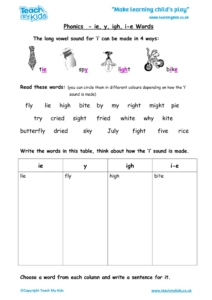
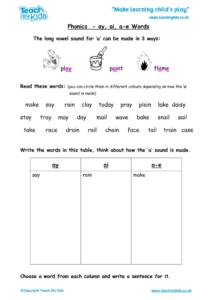
For example, a worksheet might focus on the /ai/ sound and include words with “ai” and “ay” such as “rain” and “play”. This links directly to spelling patterns KS1 children meet in the Primary National Curriculum, including:
Related: How to Use Phonics Worksheets EYFS for Reading & Writing
- Phonics phases and common graphemes
- Common exception words for Year 1 and Year 2
- Simple morphology, such as adding -s or -ed
Morphology means how word parts like prefixes and suffixes change meaning and spelling. For example “jump” becomes “jumped” when you add the suffix -ed. Worksheets work best when you use them alongside:
- Short daily phonics teaching
- Guided and independent reading
- Planned talk and vocabulary work
Which common KS1 spelling patterns and tricky words should you focus on?
You support KS1 spelling best when you focus on the most common phonics patterns first, then build up to harder ones. This matches how phonics learning resources are usually ordered in school.
For Year 1, start with:
- CVC words (consonant–vowel–consonant), for example “cat”, “dog”, “pen”
- Consonant digraphs like “sh”, “ch”, “th”, “ng”, “nk”
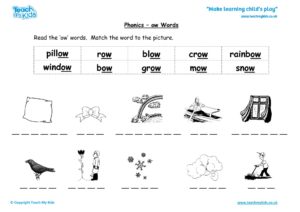
- Vowel digraphs like “ee”, “ea”, “ai”, “ay”, “oa”, “ow”, “oo”, “ue”
A digraph is two letters that make one sound, such as “sh”. A trigraph is three letters that make one sound, such as “igh” in “night”. In Year 2, children also meet:
- Trigraphs like “igh”
- Split digraphs like a_e in “cake” or i_e in “bike”
- Soft c (as /s/ in “ice”) and soft g (as /j/ in “giant”)
Tricky words, also called common exception words, do not follow the usual phonics rules all the time. Examples include “said”, “they”, “was”, “where”. With these, you still use phonics for the regular parts, then add visual memory for the odd part. For “said”, the /s/ and /d/ are regular, but “ai” makes an /e/ sound, so you draw attention to that part.
Take a look at Teach My Kids offering english worksheets that are age appropriate and organised in a ready to use way on
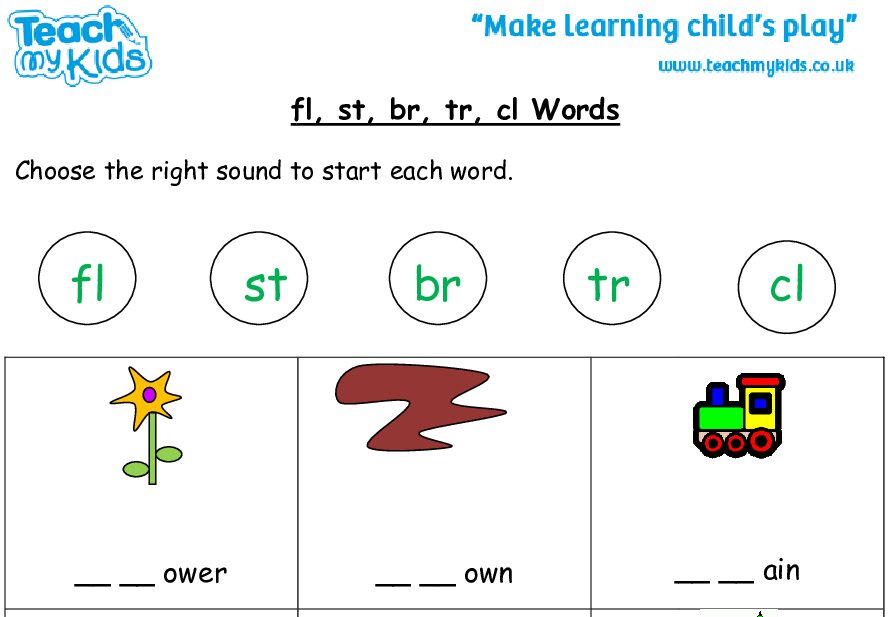
TMKed KS1 phonics spelling worksheets group words by pattern, such as all the “ee” and “ea” words together. This helps children spot the pattern faster and grow vocabulary by meeting many words with the same spelling.
Related: What can I do at home to help a reluctant reader?
How do you use KS1 phonics spelling worksheets effectively at school and at home?
You use KS1 phonics spelling worksheets best when you follow a simple routine each time. This keeps things clear for children and for adults.
- Revisit the sound: say it, read a few words and show the grapheme
- Model: you write 1 or 2 example words and say the sounds aloud
- Guided practice: children spell a few words with your support
- Independent worksheet: children work through the sheet
- Quick review: read the words back and check spellings together
How can you blend oral practice with written tasks?
You prepare children for writing by starting with sound games. Oral blending means you say the sounds and the child pushes them together to make the word, for example you say /c/ /a/ /t/ and they say “cat”. Segmenting is the reverse: the child breaks a spoken word into sounds.
Try this before a worksheet:
- Call-and-response: you say “sh”, children echo “sh” and give a word
- Clap the syllables in longer words, for example “play-ground”
- Sound-talk: say “p-l-ay” and let children blend to “play”
What games and active learning ideas can you use with worksheets?
You can turn worksheet word lists into quick games so spelling feels less like a test.
- Matching game: cut words into cards and match them to pictures
- Word hunt: hide word cards around the room for children to find and read
- Bingo: give each child a grid of target words and call them out by sound
- Partner quiz: one child reads, the other writes on a mini whiteboard
You can use TMKed phonics worksheets or phonics workbooks in small-group stations, intervention groups or after-school clubs by giving each group a different sound or pattern.
How can you differentiate KS1 phonics spelling worksheets?
You support different needs by changing how much writing each child does and how much support they get.
Related: Phonics Workbook 2 (5-7 Years)
- Shorten or extend word lists
- Add sentence writing for confident spellers, for example “The goat sat on the boat”
- Use simple dictation: you say a sentence, they write it
- Colour-code graphemes, such as writing “sh” in blue in every word
- Add picture cues for children who need more support
Parents can use the same worksheets at home in 10-minute sessions, two or three times a week, to back up early years and KS1 literacy work from school.
How can you build vocabulary and confidence with phonics-based spelling practice?
You build vocabulary and confidence when you link spelling patterns to meaning, not just to sounds. Children learn faster when words are part of a theme they understand.
For example, a “ai/ay” worksheet might use:
- Animals: snail, ray
- School life: play, tray
- Everyday actions: wait, say
Follow up with quick tasks such as:
- Write a caption: “The snail is on the tray”
- Label a picture using words from the sheet
- Complete a cloze sentence: “The goat sat on the ____”
Repeated exposure across reading, speaking, games and writing helps children remember both patterns and tricky words. TMKed educational worksheets and workbooks can be put in a simple order across Year 1 and Year 2, moving from CVC words to harder spelling patterns KS1 children need by the end of the key stage.
Related: How can I support my child with a home learning routine without overwhelming them?
FAQs: What else do teachers and parents ask about KS1 phonics spelling worksheets?
How often should children use KS1 phonics spelling worksheets each week?
Most classes use phonics and spelling worksheets two or three times a week. Short, regular practice works better than one long session.
What activities help children remember tricky words?
Use a mix of phonics and visual memory. Try:
- Sky-writing the word in the air while saying the letters
- Rainbow writing, tracing the word in three colours
- Spot-the-odd-part, for example circle the “ai” in “said”
How can I tell if a worksheet is matched to the Primary National Curriculum for KS1?
Check that it uses the Year 1 and Year 2 common exception words, the graphemes listed for KS1 phonics and simple suffixes such as -s, -es, -ed and -ing. TMKed phonics learning resources are built around these lists.
Should I focus on phonics, handwriting or spelling rules first?
Start with phonics so children can hear and spell sounds, then build clear letter formation, then add spelling rules such as adding -es to words ending in “ch” or “sh”. You can still give gentle handwriting reminders during phonics work.
How can I make phonics and spelling practice feel like a game?
Use timers, partner races, bingo grids and word hunts. Keep writing chunks short and praise effort and sound-by-sound spelling, not just perfect answers.
Simple session flow for ks1 phonics spelling worksheets

Review sound → Oral games → Model word → Guided spelling → Worksheet → Game or quick quiz
What are the next steps for using KS1 phonics spelling worksheets with confidence?
To use ks1 phonics spelling worksheets well, keep three things in mind: teach through phonics, group words by pattern and give a mix of oral, game-based and written practice. This matches how children learn in the Primary National Curriculum for English.
Related: Phonics Workbook 3 (5-7 Years)
Next, choose one or two target patterns for the week, for example “sh” and “ch”, and plan three short sessions using TMKed KS1 phonics spelling worksheets. Repeat this weekly so children see steady progress.
When you are ready to go further, explore TMKed printable phonics, spelling and vocabulary workbooks for KS1. You can then build a simple path of practice that carries children on into later primary years.
Frequently asked questions
How can KS1 phonics spelling worksheets make teaching easier?
KS1 phonics spelling worksheets make teaching easier because they give you ready-made tasks that match the sounds and spelling patterns you are teaching. You do not need to create new resources each week, so you can spend more time working with children.
What are phonics-led spelling worksheets and how do they support KS1 learning?
Phonics-led spelling worksheets are sheets where every activity is built around a sound (phoneme), the letters that spell it (grapheme) and a clear spelling pattern. A phoneme is the smallest unit of sound in a word. A grapheme is the letter or group of letters that represents that sound.
Which common KS1 spelling patterns and tricky words should you focus on?
You support KS1 spelling best when you focus on the most common phonics patterns first, then build up to harder ones. This matches how phonics learning resources are usually ordered in school.
How do you use KS1 phonics spelling worksheets effectively at school and at home?
You use ks1 phonics spelling worksheets best when you follow a simple routine each time. This keeps things clear for children and for adults.
How can you blend oral practice with written tasks?
You prepare children for writing by starting with sound games. Oral blending means you say the sounds and the child pushes them together to make the word, for example you say /c/ /a/ /t/ and they say “cat”. Segmenting is the reverse: the child breaks a spoken word into sounds.
What games and active learning ideas can you use with worksheets?
You can turn worksheet word lists into quick games so spelling feels less like a test.
How can you differentiate KS1 phonics spelling worksheets?
You support different needs by changing how much writing each child does and how much support they get.