
Published: 16 December 2025
TL;DR:
Learn how to build early years number sense through play, talk and daily routines and how to use early years maths worksheets to support learning. Practical ideas for teachers, parents and childminders that match the EYFS primary maths curriculum.
Related:Counting, Writing Numbers,Number and Counting Workbook,Number and Place Value Workbook
Key takeaways
- FAQs about early years number sense
You build strong early years number sense with talk, play and real objects, long before you reach for worksheets. Children learn best when they count things they can touch, compare amounts, spot patterns and explain what they’re thinking. Then worksheets become a quick extra step to record ideas, not the main way they meet maths.
Picture a child saying, “I have more teddies than you,” then showing you how they know. That confidence comes from rich play and conversation, not from pages of sums.
Maths skills & confidence in early years: why number sense comes before worksheets?
Early years number sense grows most strongly through play and everyday routines. When you let children pour sand, share snacks or build towers, they run into real problems that need counting and comparing.
Once children have a secure base in counting, comparing and talking about numbers, reception maths skills feel much easier. If they already understand what “5” is like in real life, reception maths worksheets make sense instead of feeling like a test.
The EYFS framework for Mathematics asks you to give children plenty of hands-on number play and number talk. Early years maths resources from TMK Education then add to this by offering short, focused tasks that match what children already know from real life.
What is early years number sense and why does it matter?
Early years number sense is about children understanding what numbers stand for, how they link to real amounts and how groups can be joined or split. It’s much more than just saying number names in order like a song.
This links directly to EYFS Mathematics, especially the Number and Numerical Patterns goals. It also links to Communication and Language, because children need words and phrases to explain their ideas clearly.
How does number sense support later maths and confidence?
Learning through play to build strong early years number sense supports later work on addition, subtraction, place value and problem solving in KS1 and KS2. Place value means that where a digit sits in a number changes its value. For example, the 3 in 30 means three tens, not just “3”.
When children can really “feel” what numbers mean, they trust themselves more. Worksheets then feel like a way to record thinking, not something to be scared of.Worksheets are there to support learning, rather than being the main focus of learning. This builds EYFS maths confidence because children are more willing to have a go, check and correct their work.
What does secure number sense look like in Nursery and Early Years?
You see secure number sense in simple, everyday activities such as:
- Recognising small sets, for example saying “3” when they see three dots without counting each one
- Counting objects with one touch for each number word
- Comparing amounts and using words like “more” and “fewer”
- Explaining how they worked something out, even if it’s in very simple words
These match typical EYFS outcomes, such as knowing numbers to 10, comparing groups and noticing patterns in number and shape.
How can you build early years number sense through play and routines?
Early years number sense grows best when children handle real objects and talk about what they notice. You can then add short bits of recording or simple worksheets alongside this play.
What play-based activities help early counting and comparing?
You don’t need special toys to build foundation stage numeracy. You can use what you already have. Try:
- Blocks: “Build a tower with 6 blocks. Can you build one with more?”
- Cars or teddies: “Give 2 cars to each toy. How many cars do we need?”
- Beads or buttons: make sets of 5, then 6, then compare which has more
- Nature items like stones or leaves: sort into groups and count each group
You can turn these into simple games:
- “Who has more?” Compare two plates, two piles or two bowls.
- Treasure hunts: “Find 4 red things.” Then count them together.
- Number hunts: match counted objects to numerals on doors, toy boxes or labels.
How can daily routines become maths without worksheets?
Everyday moments are some of the best numeracy activities. You don’t need to set up a big lesson. For example:
- Snack time: “We have 5 grapes. If you eat 2, how many are left?”
- Tidy-up time: “Put 3 blocks on the shelf, then 3 more. How many altogether?”
- Lining up: count children in the line, ask who is first, next and last.
- Setting the table: “We need 4 cups. How many do we have now?”
- Sharing toys: “We have 8 bricks and 2 children. How many each?”
As you talk, model maths words: more, fewer, altogether, double, half, first, next, last, before, after. Children pick these up over time when they hear them often.
How do you develop pattern, shape and mathematical language?
Patterns and shapes support Numerical Patterns in EYFS and help children spot structure in numbers later on. A pattern is something that repeats in the same way, for example red-blue-red-blue.
Try:
- ABAB patterns with toys: car, doll, car, doll
- Clap-stamp patterns: clap, stamp, clap, stamp
- Colour lines: red, yellow, red, yellow
Ask, “What comes next? How do you know?” Encourage full sentences so children practise maths words and reasoning at the same time.
Worksheets To Support Children When Finding Patterns
When are children ready for reception maths worksheets?
Early years maths worksheets work best when they build on what children already understand from play. Use them as short practice or a record after rich talk and hands-on work, not instead of it.
What are signs a child is ready for worksheets?
Children are ready to benefit from worksheets when they:
- Count small sets correctly most of the time
- Recognise some numerals, for example 1 to 5
- Match numerals to sets, for example put “3” next to three teddies
- Stay with a short adult-led task for a few minutes
Keep worksheet times short and give clear praise linked to effort: “You checked your counting again. That helped you get it right.” This keeps the focus on learning, not on being “good” at maths.
Writing Numbers Worksheets To Support and Help Children Recognise Numbers
How do you bridge from hands-on play to written maths?
To move from play to paper, keep the link to real objects very clear. For example:
Related: Number, Fractions, Decimals & Percentages, Workbook 2 (9-11 Years)
- Place counters or blocks on top of pictures on the sheet.
- Count together out loud as you move the counters.
- Ask the child to write or trace the number.
Start with visual, low-text sheets that look like games or daily routines they already know. Think pictures of snacks, toys or simple scenes rather than long instructions.
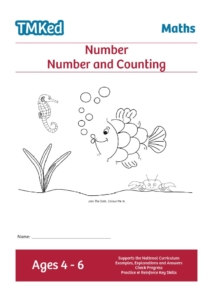
Counting Worksheets Which Support Learning Through Play
How can TMKEd resources support this step?
TMKEd early years maths resources follow EYFS and early Primary National Curriculum expectations. The worksheets and activities focus on numbers to 10, then 20, counting, simple addition and subtraction and early patterns.
Teachers, parents and childminders can print a small set of reception maths worksheets to match the week’s play tasks. This saves planning time and keeps a clear link between hands-on work and written practice.
View TMKEd Early Years Maths Worksheets
What strategies help you grow EYFS maths confidence?
Your words and actions strongly shape how children feel about maths. When you stay calm about mistakes and praise effort, children learn that maths is something they can get better at with practice.
What teaching strategies work well for teachers and childminders?
In group times and small tasks, you can:
- Ask open questions: “How do you know?”, “Can you show me another way?”
- Offer different objects for the same idea, for example blocks, beads and pictures.
- Give more support to some children, for example counting together, and extra challenges to others.
This keeps one activity useful for children at different stages and avoids lots of extra planning.
How can parents and carers support maths at home?
You don’t need long lessons at home. Short, frequent games work better. Try:
- Board games and dice games that need counting steps
- Counting stairs as you go up and down
- Number hunts for house numbers or bus numbers
Focus on effort and strategies: “You tried a different way when it was hard. That is what mathematicians do.” This builds a growth mindset, which means believing you can get better with practice.
How does planning ahead from EYFS into KS1 and KS2 help?
Strong early years number sense supports later topics like place value, times tables, fractions and word problems. Fractions are equal parts of a whole, for example half of a pizza or half of a cake.
A bank of ready-to-use learning resources and worksheets across year groups helps you keep ideas connected so children see how their early counting links to later written methods.
FAQs about early years number sense
How can I tell if my child is struggling with early years number sense?
Look for signs such as avoiding counting games, guessing answers without checking or finding “more/fewer” hard even with small sets. If you see this, go back to simple play with real objects, slow the pace and add lots of talk.
What if my child can recite numbers but makes counting mistakes?
This is very common. Counting words can feel like a song, but counting objects needs one touch for each number. Play slow counting games where you both point and say each number once, maybe even moving objects into a “counted” pile.
How much time should we spend on maths activities each day?
Short, regular bits work best. Aim for several 5 to 10 minute moments across the day, built into play and routines, rather than one long session that everyone finds tiring.
Do I need special resources or can I use things from around the house?
You can use everyday items such as pasta, pegs, socks or toy cars. Early years maths resources and worksheets are helpful when you want quick tasks that match EYFS goals, but they don’t replace real play with real things.
How do I support children who are already very confident with numbers?
Offer deeper challenges instead of jumping straight to bigger numbers. For example:
- Ask them to explain different ways to make 5 or 10.
- Give simple word problems, such as “You have 7 apples and give 3 away. How many now?”
- Explore patterns in even and odd numbers.
Conclusion: what are your next steps for building early years number sense?
Playful, talk-rich experiences build early years number sense so children feel ready for later worksheets. Hands-on counting, comparing and pattern spotting turn abstract numbers into ideas that make sense.
Pick one or two new play-based ideas to try this week, then follow up with a short, simple worksheet that matches that same skill. If you want structured tasks that fit the EYFS and early National Curriculum, explore TMK Education’s EYFS and reception maths resources to support your planning and grow children’s confidence.
Frequently asked questions
How do children learn through play to build maths skills?
Early years number sense grows most strongly through play and everyday routines. When you let children pour sand, share snacks or build towers, they run into real problems that need counting and comparing.
What is early years number sense and why does it matter?
Early years number sense is about children understanding what numbers stand for, how they link to real amounts and how groups can be joined or split. It’s much more than just saying number names in order like a song.
How does number sense support later maths and confidence?
Strong early years number sense supports later work on addition, subtraction, place value and problem solving in KS1 and KS2. Place value means that where a digit sits in a number changes its value. For example, the 3 in 30 means three tens, not just “3”.
What does secure number sense look like in Nursery and Reception?
You see secure number sense in simple, everyday behaviours such as:
How can you build early years number sense through play and routines?
Early years number sense grows best when children handle real objects and talk about what they notice. You can then add short bits of recording or simple worksheets alongside this play.
Related: Number, Algebra and Word Problems
What play-based activities help early counting and comparing?
You don’t need special toys to build foundation stage numeracy. You can use what you already have. Try:
How can daily routines become maths without worksheets?
Everyday moments are great for developing early maths skills, from sharing out pieces of fruit to putting beads on a string. You don’t need to set up a big lesson. There are many situations during the day where you can incorporate developing maths skills such as counting, adding, finding patterns etc.
View Our Early Years Worksheets and Workbooks To Support Developing Maths Skills