
Published: 23 December 2025
TL;DR:
Learn how to build KS2 spelling strategies that stick using short daily routines, pattern-based word lists and vocabulary-rich worksheets for school and home.
KS2 spelling strategies that stick use short daily routines, pattern-based word lists and quick writing tasks so children use words in context, not just for a test. When you repeat the same simple steps each week, spelling turns into a habit instead of a one-off activity.
Do your pupils or your child score well in the Friday spelling test then spell the same words wrong in Monday’s writing? You’re not on your own. Lots of KS2 children can cram spellings for a test but don’t keep them for real writing.
How can KS2 spelling strategies become routines that actually stick?
KS2 spelling strategies stick when you link phonics, spelling rules and word meaning in the same weekly pattern. Years 3 to 6 are when children move from sounding out most words to spelling many words automatically.
Many teachers follow the same cycle: send home a list, quick look in class, test on Friday, then move on. Children often learn the order of the list instead of the spelling pattern. They hold the words in short-term memory for the test then lose them when they write a story or a science paragraph.
A better approach is to build a repeatable routine based on patterns. You teach how the spelling works, what the word means and how to use it in a sentence. This is where structured KS2 spelling worksheets and workbooks can help. TMKed offers ready-made, National Curriculum-linked spelling worksheets and workbooks so you can drop these routines straight into lessons or home practice without extra planning.
What do children in Years 3–6 actually need from spelling practice?
KS2 spelling practice works best when it matches what the National Curriculum asks for. Children need to use phonics, learn spelling rules, remember statutory word lists and choose words that fit the sentence.
In KS1, the focus is decoding. Decoding means using phonics to read words by matching sounds to letters. In KS2, children move to encoding. Encoding means using phonics and rules to build the spelling of a word from the sounds they hear or say.
Common KS2 problems include:
- homophones such as there, their and they’re
- suffixes such as -tion, -sion and -cian
- silent letters such as knee or doubt
- commonly misspelt words such as because or different
Good spelling frees working memory. Working memory is the short-term space in the brain that holds ideas while you write. When children don’t need to think hard about every spelling, they can focus on ideas, grammar and style.
How do you design a KS2 spelling routine that works every week?
An effective KS2 spelling routine follows the same steps every week: introduce, explore, practise, apply and review. You can use this structure with any word list.
Week flow:
Day 1 → Introduce pattern and words
Day 2 → Explore and sort words
Day 3 → Practise with worksheets
Day 4 → Apply in sentences and short writing
Day 5 → Review and quick check
How do you choose and organise word lists for KS2?
Choose word lists that mix patterns, words from the National Curriculum and topic words from science, history or geography.
- Use groups such as -sure and -ture or words with the same sound spelled in different ways
- Plan for about 60 to 70 percent revision words and 30 to 40 percent new words
- Give a core list to most children and an extra extension list to confident spellers
How can pattern-based spelling worksheets move you beyond rote learning?
Pattern-based spelling worksheets KS2 help children notice how words work instead of copying them again and again. Rote learning means repeating something without really thinking about it.
- Ask pupils to sort words by suffix, sound or rule
- Set word investigations such as “What do these words have in common?” or “When does y change to i?”
- Use TMKed spelling worksheets for quick 10 to 15 minute slots that focus on one clear pattern
How do you embed vocabulary extension into spelling practice?
Spelling improves faster when you link it to meaning. Vocabulary extension primary work means helping children learn more words and use them well.
- Match words to meanings, draw them or act them out
- Ask children to use new words in spoken and written sentences
- Search reading books for the week’s pattern or for synonyms, which are words with similar meanings
- Play games such as word bingo, odd one out or vocabulary ladders where pupils move from a simple word to a more precise one
How can you tackle tricky words and common KS2 spelling errors?
Tricky words are hard because they don’t follow the most common phonics patterns or they have silent letters. Children need clear routines for these.
What strategies help with high-frequency tricky words?
High-frequency words are words that appear very often in reading and writing. For these, short multi-sensory routines work well.
- Say the word, clap the syllables, write it in the air then on paper
- Teach simple memory tricks such as “necessary has one collar c and two sleeves s”
- Use focused tricky-word worksheets for 5 minute bursts each day
How do you fix the most common KS2 spelling mistakes?
Common spelling errors KS2 include doubling consonants, adding -ed or -ing and mixing up there, their and they’re.
- Collect errors from real writing
- Sort them into groups such as “double letters” or “homophones”
- Teach or revisit the rule
- Practise with “error clinic” tasks where pupils correct and rewrite
TMKed spelling worksheets and grammar worksheets use spot-the-mistake and editing tasks so children fix real sentences, not random words.
How do you fit KS2 spelling strategies into busy days?
You fit KS2 spelling strategies into your week by using short 10 to 15 minute blocks. Little and often beats one long session.
What classroom-friendly spelling routines work for teachers and TAs?
In class, use regular slots such as morning starters or straight after lunch.
- Monday: introduce pattern and list
- Tuesday: word investigation or sorting task
- Wednesday: workbook or worksheet practice
- Thursday: spelling game and short dictation
- Friday: quick review check and look back at writing
Printable, grab-and-go spelling worksheets KS2 mean cover staff and clubs can keep the same routine.
What simple home spelling routines can parents and tutors use?
At home, a 3 step routine keeps things calm and steady.
- Review yesterday’s words for 2 to 3 minutes
- Do a short worksheet or game
- Use 1 or 2 words in a spoken or written sentence
You can also try fridge lists, car spelling games or “read the room” where your child hunts for the week’s pattern in books and signs. TMKed workbooks give a clear path so adults don’t need to design tasks.
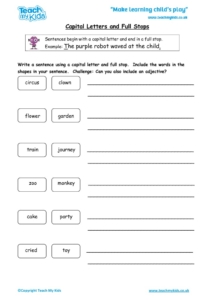
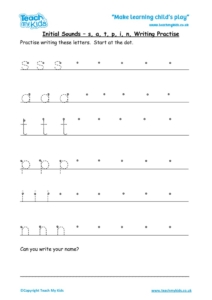
If you need spellings worksheets and other literacy worksheets aligned for a year group, following the National Curriculum objectives, visit our sister website Teach My Kids. Spelling worksheets are age appropriate and organised in a ready to use way. View Teach My Kids Worksheets.
What are quick answers to common KS2 spelling strategy questions?
Here are short replies to frequent questions about KS2 spelling strategies.
- How many spellings each week? Often 8 to 12 words is enough, plus revision words
- What if the same words stay wrong? Keep them on the list for several weeks and use extra tricky-word routines
- Strong reader, weak speller? Focus on encoding tasks, dictation and pattern sorting, not just reading more
- Are spelling tests useful? Yes, if they link to the week’s pattern and you reuse the words in writing
- How to balance phonics, rules and vocabulary? Choose one weekly pattern, link it to a rule and teach meanings through reading and writing
What are the next steps for stronger KS2 spelling routines?
KS2 spelling strategies work best when they are pattern-based, link phonics with vocabulary and repeat in a steady weekly routine. Children then remember words for their writing, not just for a test.
This week, choose one or two ideas to start. For example, set a daily 10 minute slot or pick one pattern to explore across reading, spelling and writing.
To save planning time, you can use TMKed KS2 spelling and vocabulary worksheets and spelling workbooks as the base for your spelling routines classroom or at home. Track progress with weekly reviews, edited writing samples and simple pupil notes on words that now feel easier.
Where to find ready to print spelling and vocabulary worksheets organised by school year.
Visit our sister website Teach My Kids. Spelling and vocabulary worksheets are organised age appropriately and ready to use. View Teach My Kids Worksheets.
Frequently asked questions
How can KS2 spelling strategies become routines that actually stick?
KS2 spelling strategies stick when you link phonics, spelling rules and word meaning in the same weekly pattern. Years 3 to 6 are when children move from sounding out most words to spelling many words automatically.
What do children in Years 3–6 actually need from spelling practice?
KS2 spelling practice works best when it matches what the National Curriculum asks for. Children need to use phonics, learn spelling rules, remember statutory word lists and choose words that fit the sentence.
How do you design a KS2 spelling routine that works every week?
An effective KS2 spelling routine follows the same steps every week: introduce, explore, practise, apply and review. You can use this structure with any word list.
How do you choose and organise word lists for KS2?
Choose word lists that mix patterns, words from the National Curriculum and topic words from science, history or geography.
How can pattern-based spelling worksheets move you beyond rote learning?
Pattern-based spelling worksheets KS2 help children notice how words work instead of copying them again and again. Rote learning means repeating something without really thinking about it.
How do you embed vocabulary extension into spelling practice?
Spelling improves faster when you link it to meaning. Vocabulary extension primary work means helping children learn more words and use them well.
How can you tackle tricky words and common KS2 spelling errors?
Tricky words are hard because they don’t follow the most common phonics patterns or they have silent letters. Children need clear routines for these.